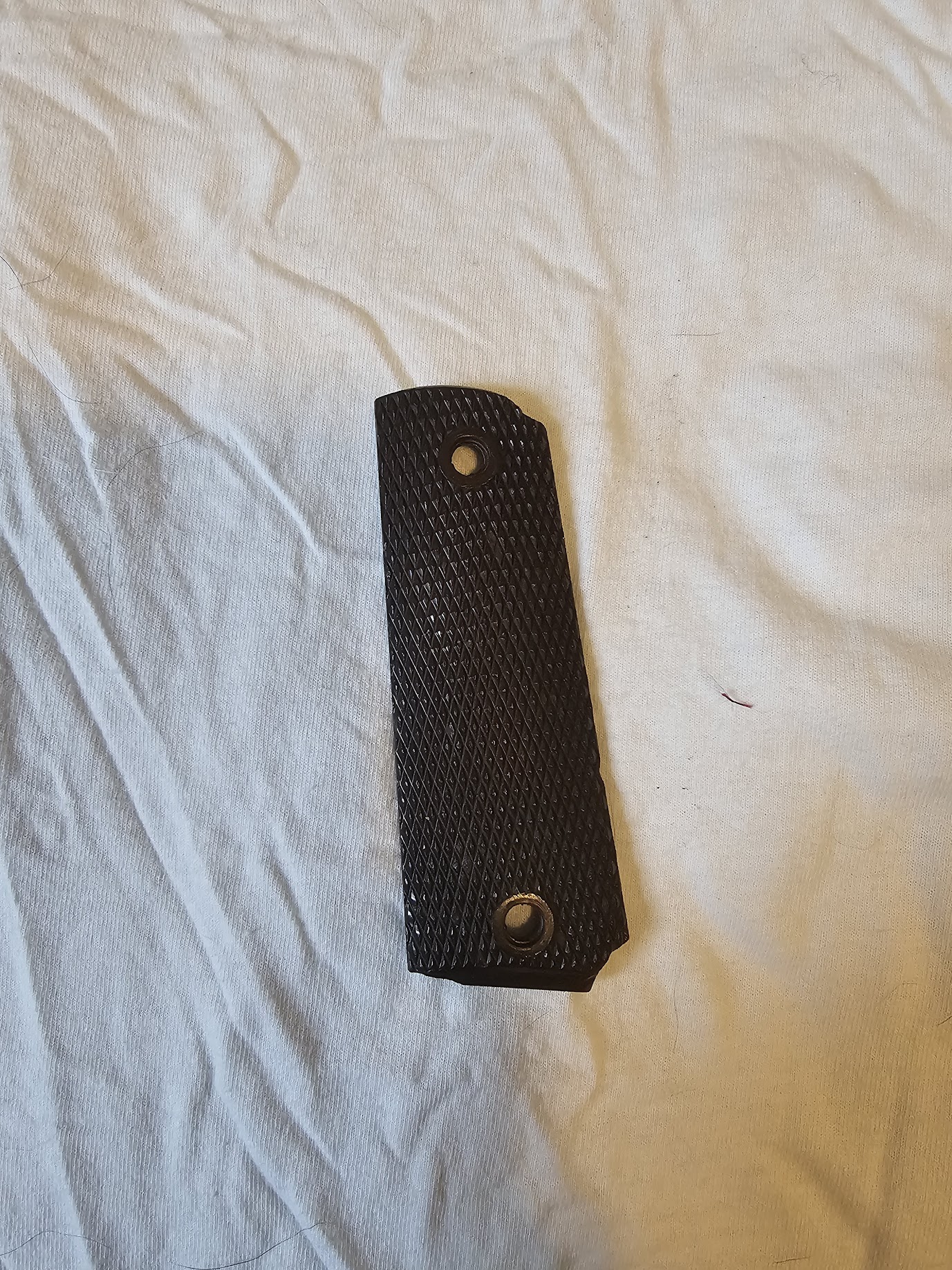
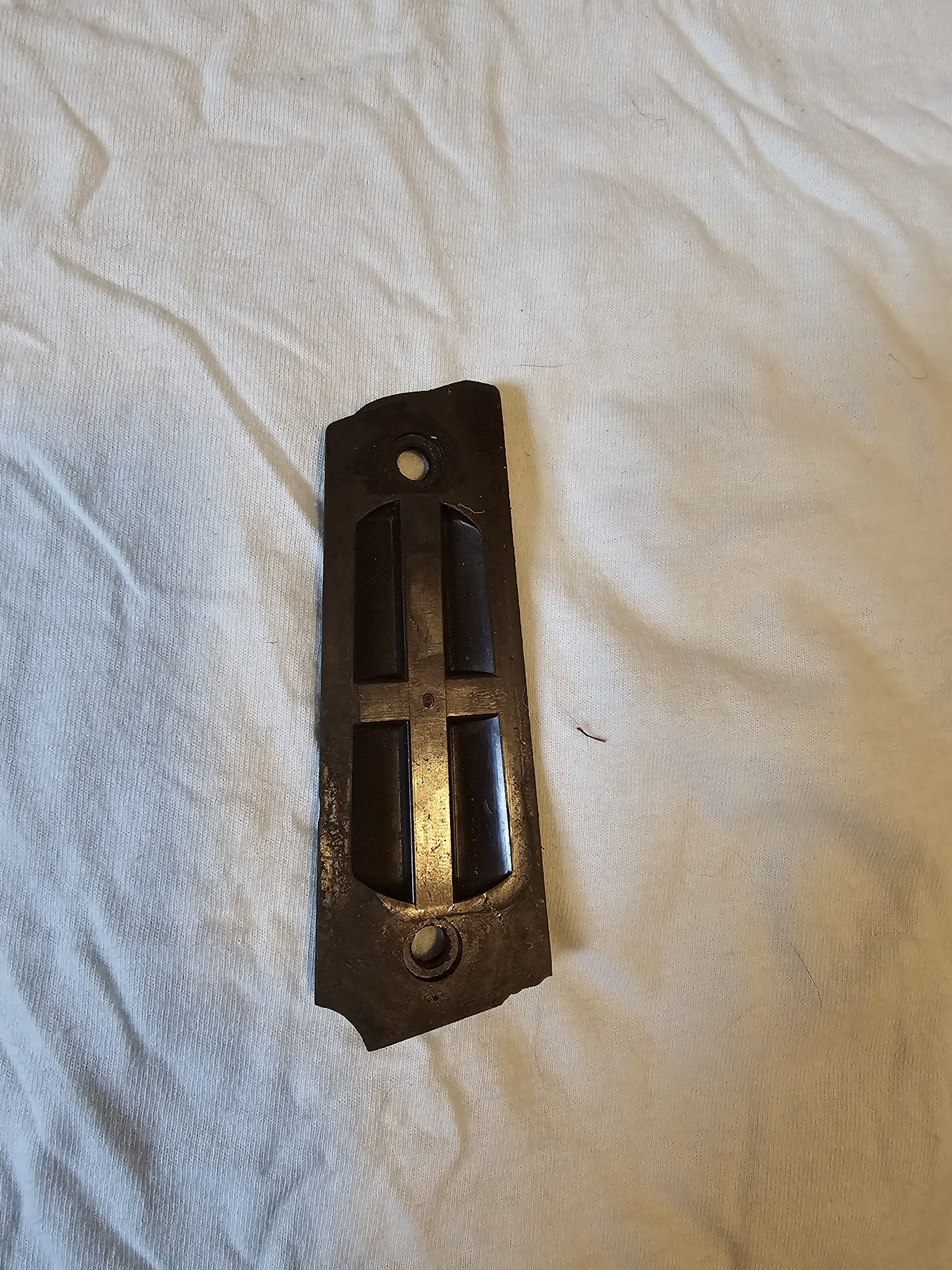
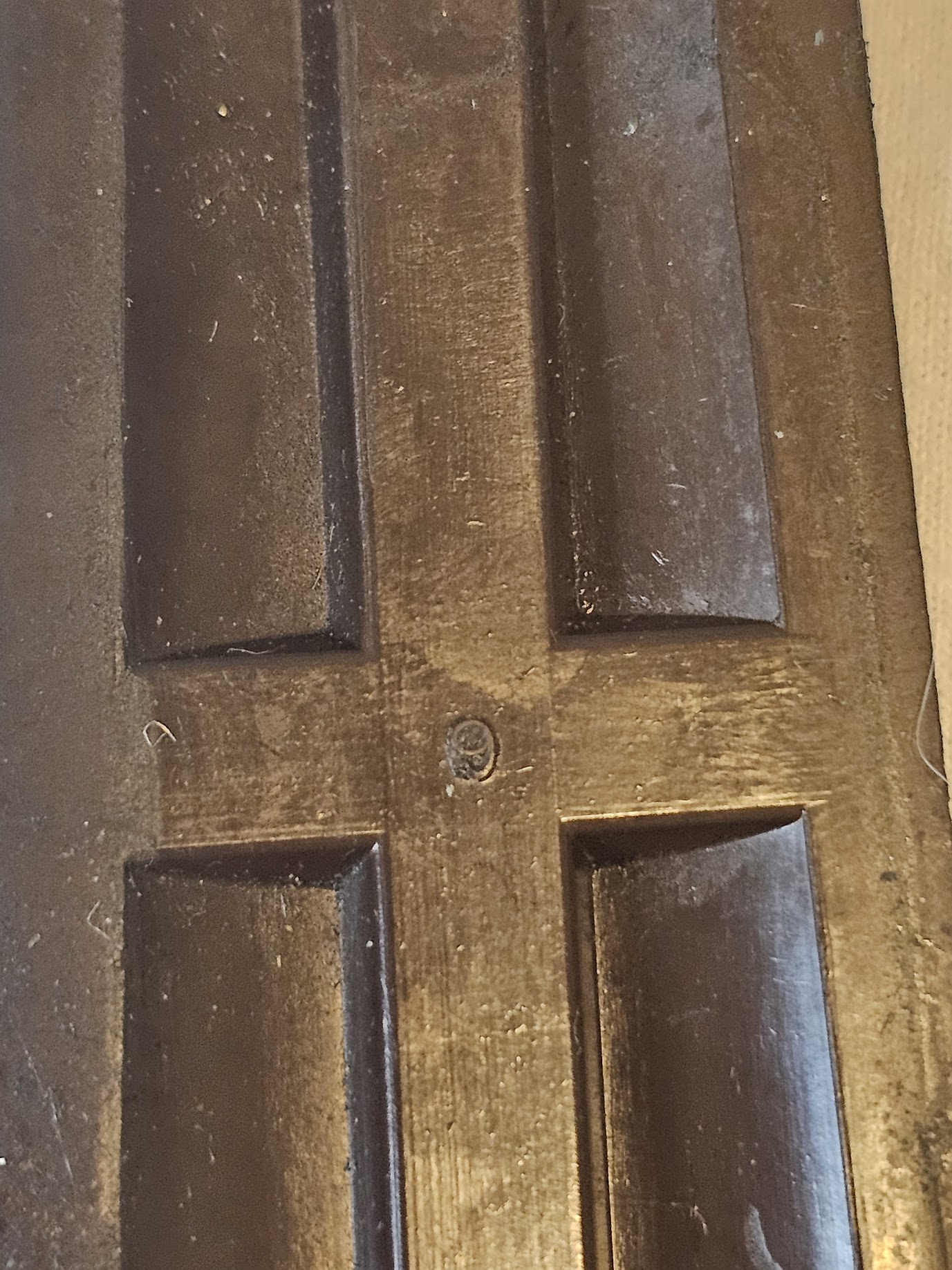
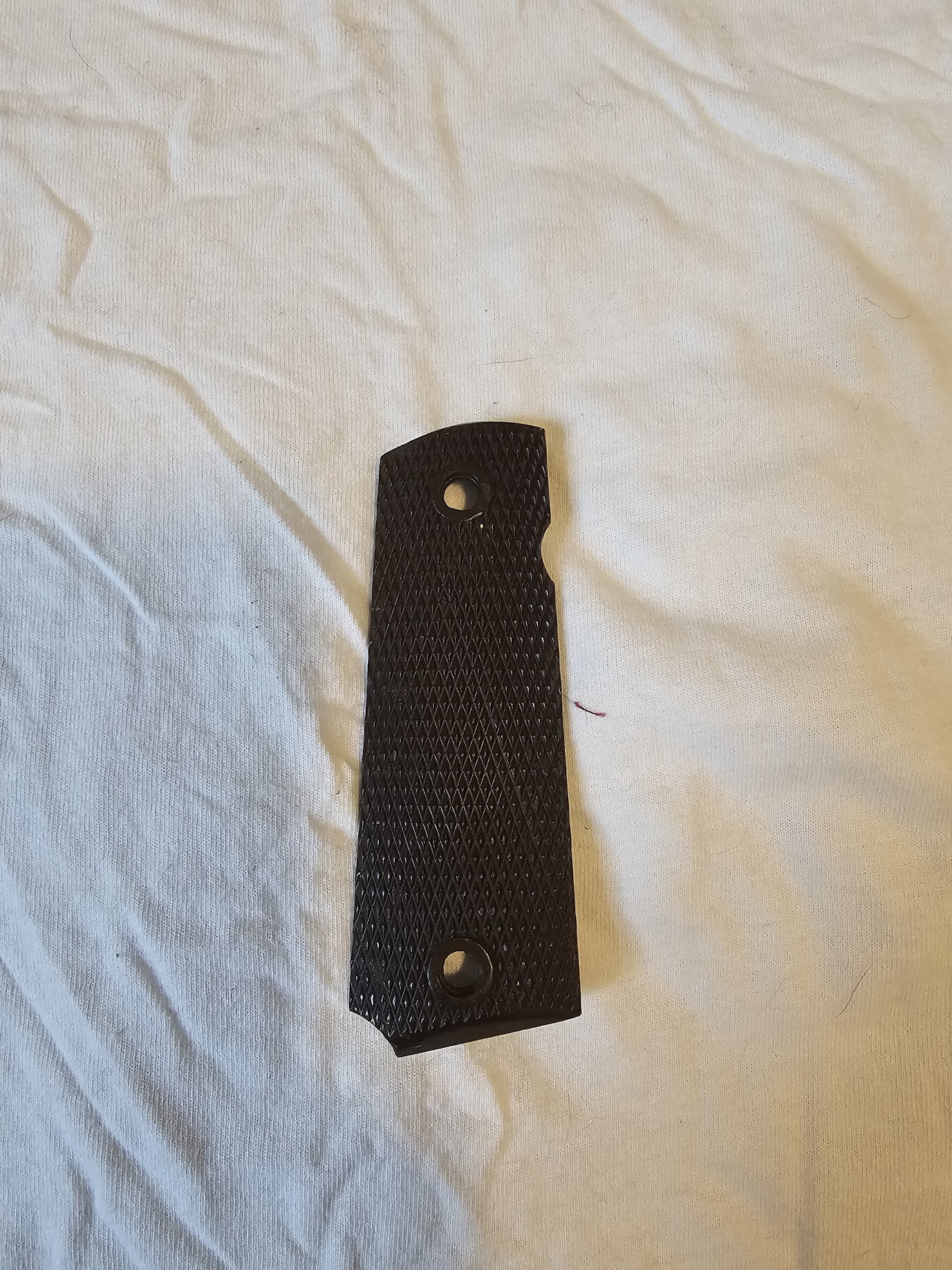
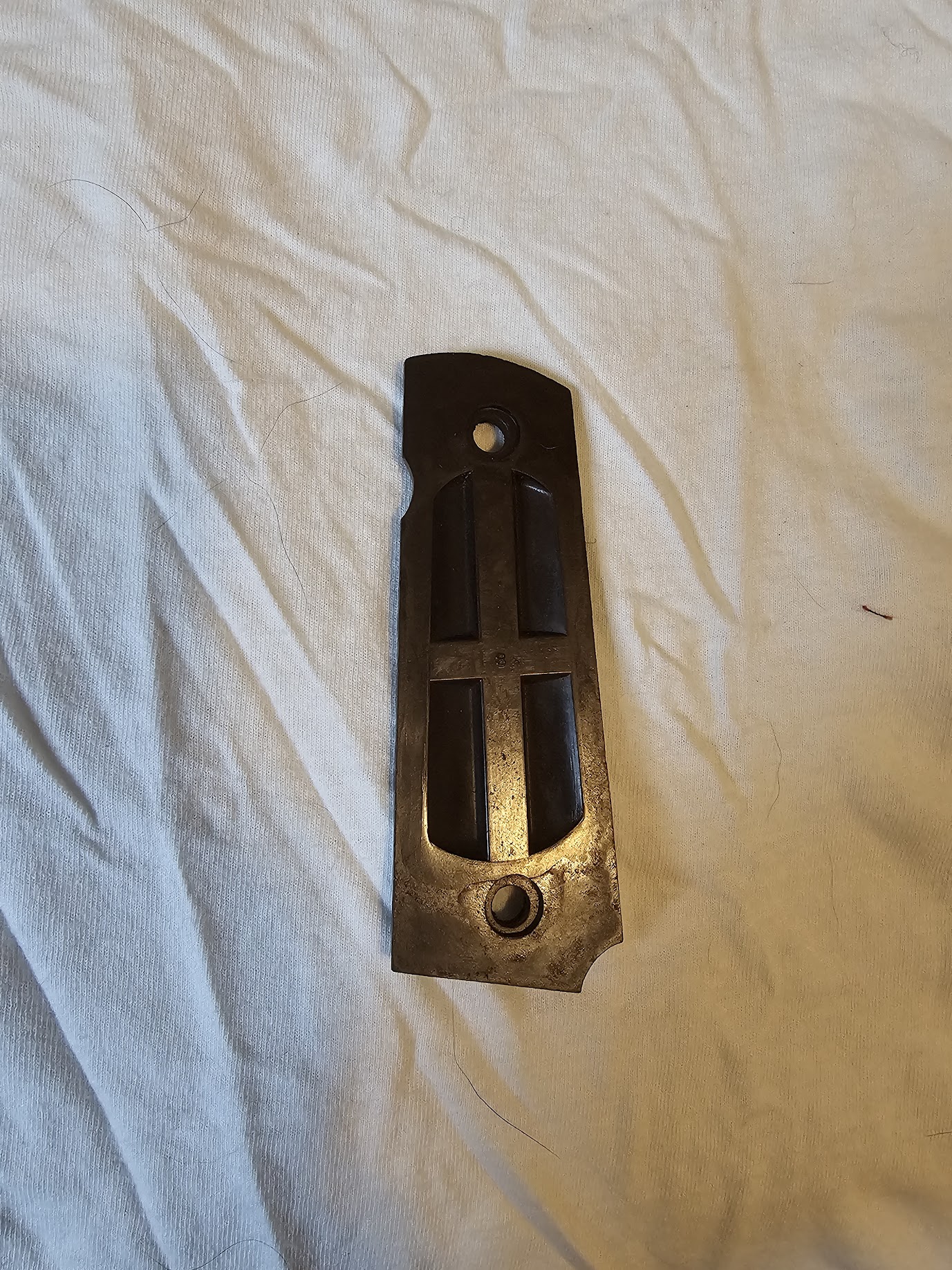
Grips are one of the easiest features to compare when documenting 1911 and 1911A1 examples. Grip style, material, mold markings, and condition should be recorded with clear photos.
| Grip Type | Collector Notes |
|---|---|
| Double Diamond Walnut | Commonly associated with earlier M1911 production. |
| Brown Plastic Grips | Frequently encountered on WWII-era M1911A1 examples. |
| Colt “Coltwood” Plastic Grips | Brown molded plastic Colt grip style. Interior rib pattern and mold numbers help document subtype. |
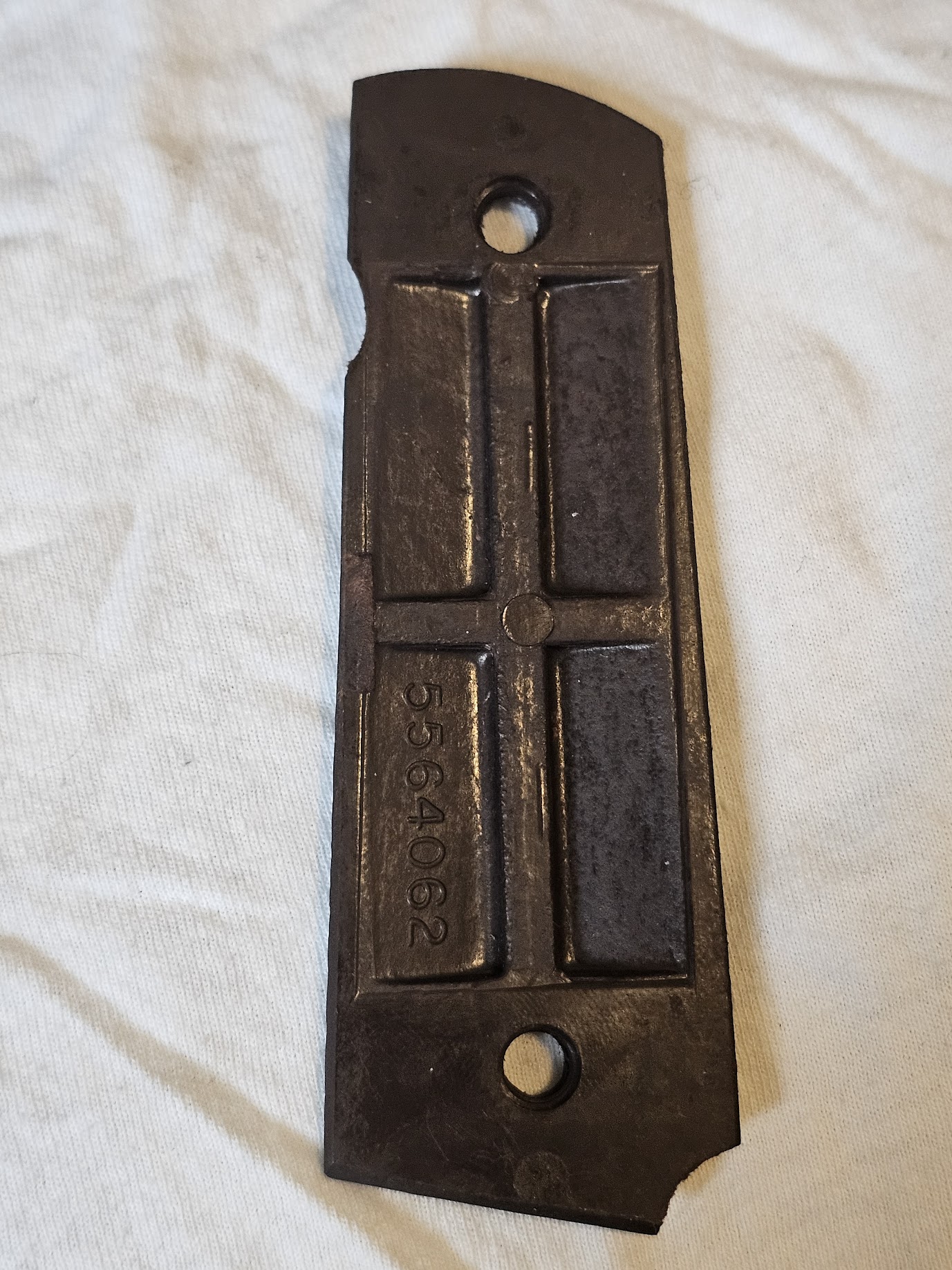
| Keyes Fibre Grips | Common contractor grip style with molded reinforcing ribs, screw-hole rings, and mold numbers. |
| Replacement Grips | May indicate service replacement, repair, or later owner replacement. |
This documented set shows Colt “Coltwood” brown plastic grip panels. The set includes one panel marked with mold number 9 and one companion panel marked with mold number 8. The reverse side shows the Type 7-style cross-rib reinforcement pattern with reinforced screw-hole areas.
This entry is provided as a visual reference for molded features, rib layout, mold marks, material, exterior texture, and condition. Grip panels should be compared by exterior checkering, interior rib pattern, screw-hole reinforcement, color, wear, and any visible mold numbers.
| Feature | What to Document |
|---|---|
| Material | Brown molded plastic often described by collectors as Coltwood. Color may range from reddish brown to very dark brown depending on lighting, wear, and age. |
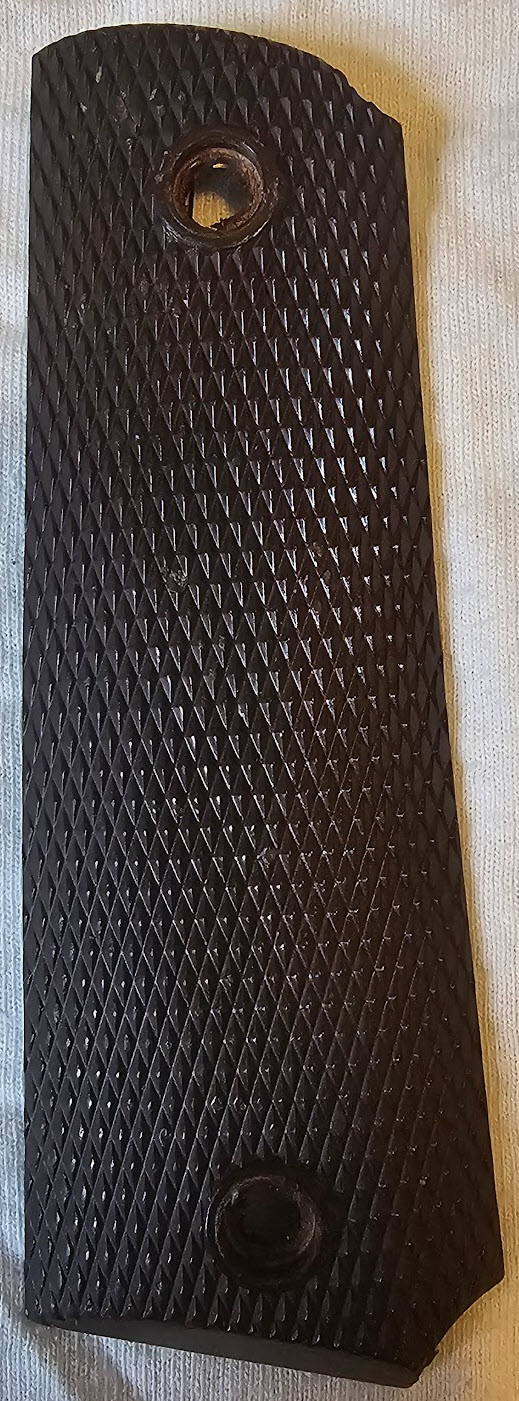
| Exterior | Standard checkered face with molded screw-hole rings. Exterior photos should show the whole panel and any chips, flattened checkering, staining, or edge wear. |
| Interior Pattern | Type 7 examples are identified by the reverse-side reinforcing rib layout. Clear interior photos are more useful than exterior-only photos. |
| Mold Numbers | Small molded numbers such as 8 or 9 identify mold cavities or production tooling marks. They are not serial numbers and do not identify a specific pistol. |
| Difference From Keyes Fibre | Keyes Fibre grips commonly show contractor-style markings and a different rib layout. Coltwood panels should be recorded separately from Keyes Fibre examples. |
| Condition Notes | Record cracks around screw holes, missing corners, warping, repairs, oil staining, and differences in color between the two panels. |
Photo standard: For each Coltwood panel, record an exterior view, full interior view, close-up of the mold number, close-ups of both screw-hole areas, and close-ups of any cracks or damage. When a pair has different mold numbers, list both numbers in the title.
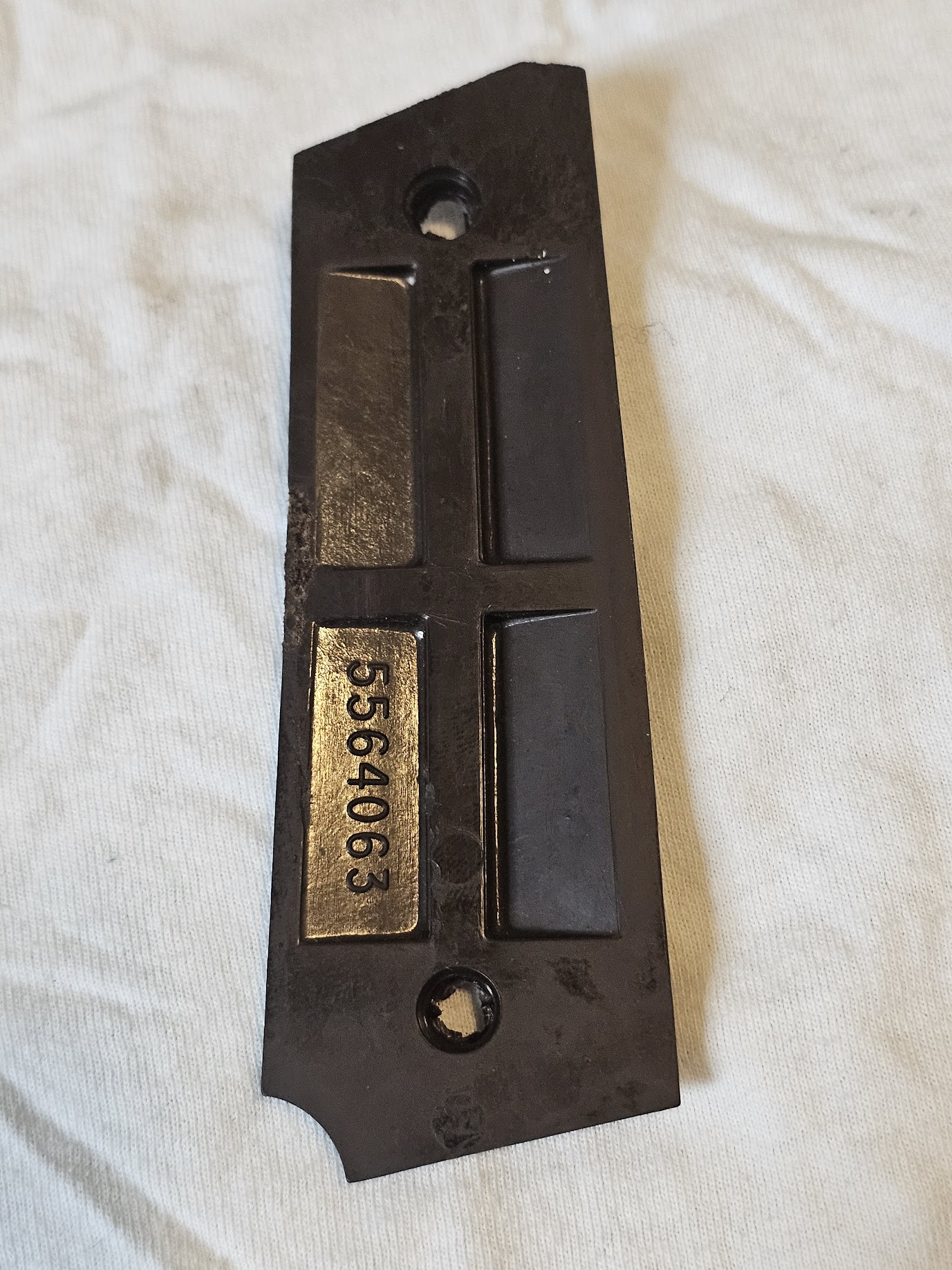
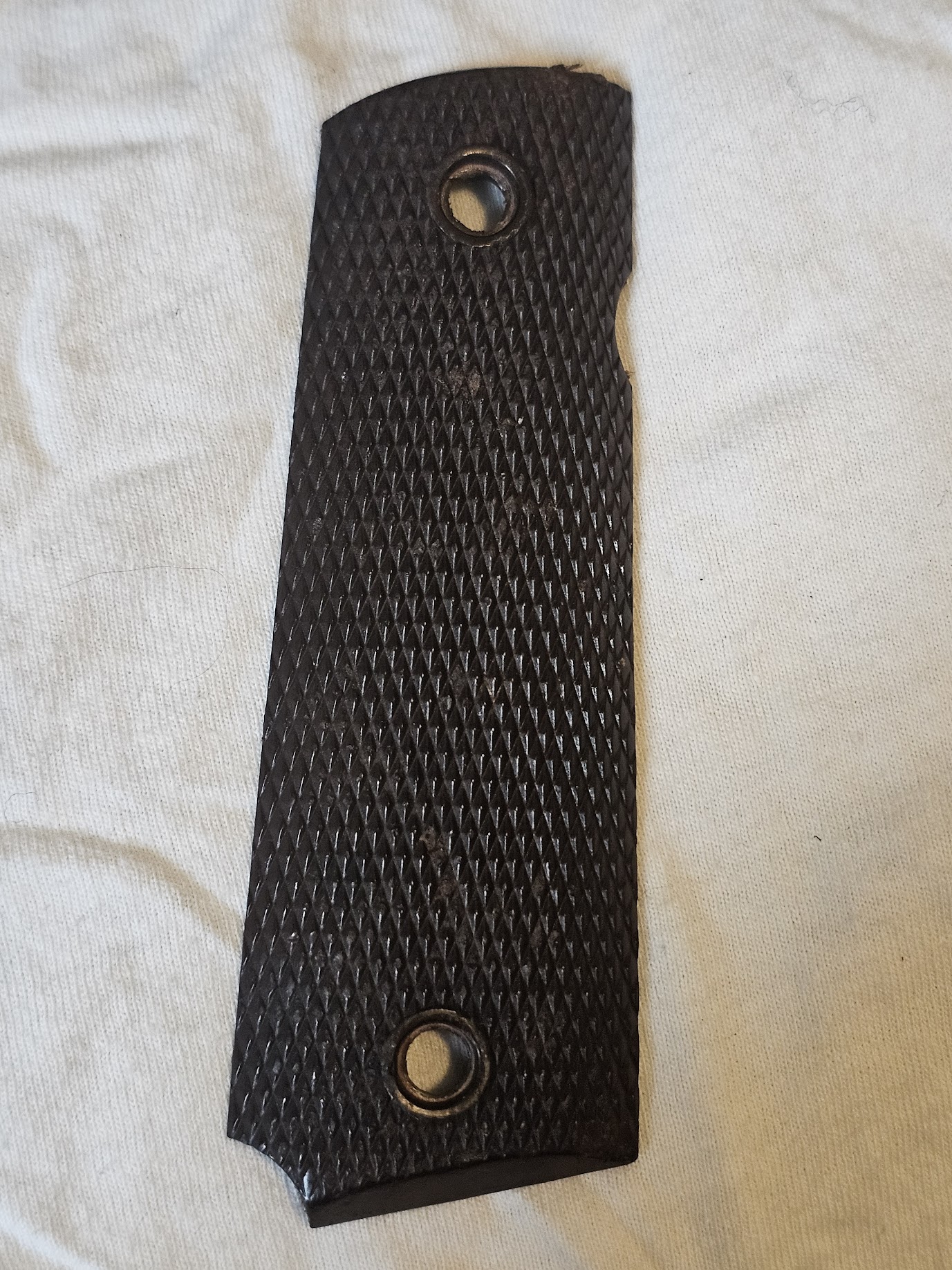
This pair documents WWII Keyes Fibre brown plastic M1911A1 grips. The left panel is marked 5564063 and the right panel is marked 5564062. Observed features include brown phenolic plastic construction, molded reinforcing ribs, screw-hole reinforcement rings, and standard checkering.
This documented grip pair is not tied to a specific pistol record unless provenance or mounted photographs are added. Damage to one panel should be recorded as condition evidence.
| Area | What To Review |
|---|---|
| Color | Compare grip color to documented examples. |
| Texture | Review checkering pattern and molding style. |
| Interior | Look for reinforcing ribs, screw-hole rings, mold numbers, and other molded details. |
| Mold Numbers | Document visible mold numbers such as Coltwood 8/9 or Keyes 5564062/5564063. |
| Wear | Wear should be documented with close-up photos. |
| Fit | Poor fit may indicate replacement or alteration. |
| Notes | Record cracks, chips, repairs, and missing material. |